From UNGA 81 to Nigeria: Turning Global Health Commitments into Stronger Systems
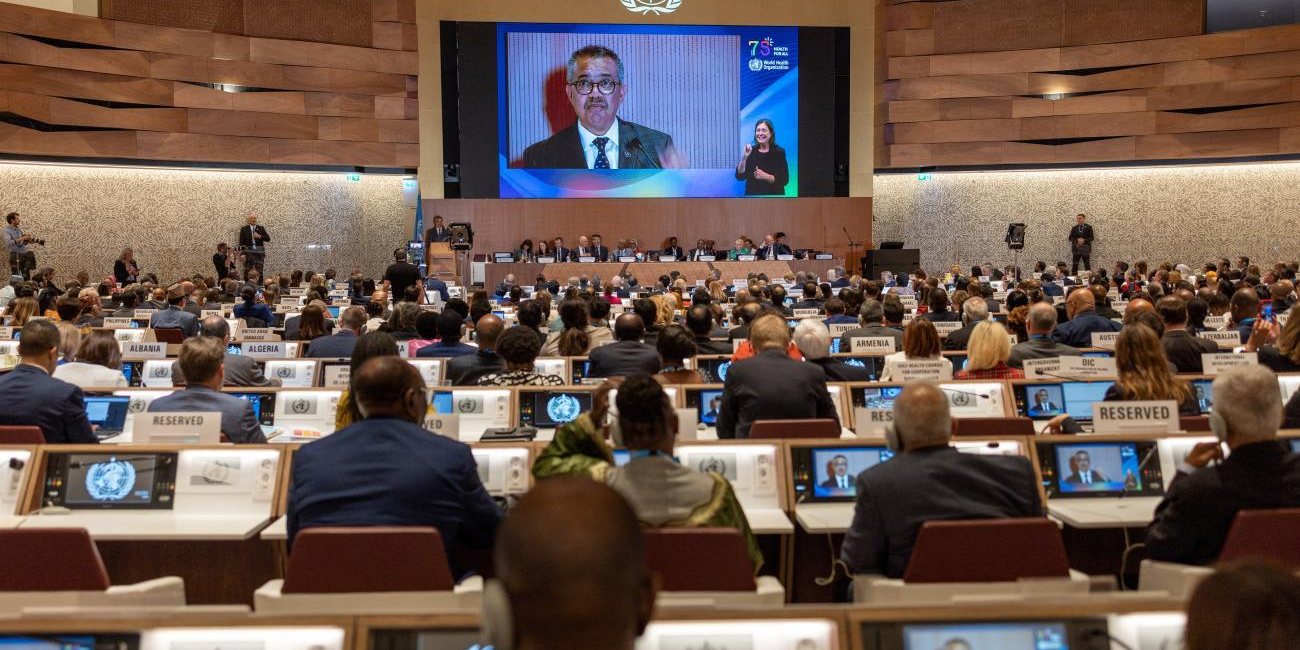
Preparedness cannot be switched on when an outbreak begins. It must be built into the everyday health system.
The Second High-Level Meeting on Pandemic Prevention, Preparedness and Response (25 September 2026) called for stronger surveillance, resilient health systems, equitable access to vaccines and medicines, sustainable financing, community participation and a One Health approach. For Nigeria, these are not distant global priorities. They describe challenges already at the door: how do we build a health system that is prepared every day, not only when a crisis occurs?
“No country can protect itself alone.”
Amina J. Mohammed, UN Deputy Secretary-General, on behalf of the Secretary-General, UNGA 81
“Pandemic prevention, preparedness and response is not merely a noble aspiration.”
Dr Tedros Adhanom Ghebreyesus, WHO Director-General, 25 Sept 2026
Nigeria in numbers
Readiness gaps
IHR score, %
Lab capacity is double surveillance (80% vs 40%); the emergency framework trails by 47 points.
Source: WHO 2024 IHR assessment
Children missing vaccines
Millions of children
About 0.7M more children missed measles than are zero-dose, so many entered the system but did not complete it.
Source: UNICEF 2024 analysis
Who pays for health?
Share of spending and of population
Carried by householdsOther sources or covered
Over three-quarters of spending is out-of-pocket, and roughly 19 in 20 Nigerians have no pooled cover.
Source: African Health Observatory Platform
Our read: Nigeria can test (labs at 80%) but struggles to detect early and coordinate (40% and 33%). Immunisation gaps are widest where protection matters most, and households carry the financial risk. Preparedness is a primary care and financing question, not only an emergency one.
Five shifts Nigeria can make
- Make primary health care the centre. Connect surveillance, immunisation, community health workers, laboratories and reporting through PHC, linked to state and national decisions.
- Invest in local surveillance and labs. The genomic sequencing upgrade at the National Polio Laboratory in Maiduguri shows what sustained investment makes possible.
- Treat health financing as preparedness. Strengthening domestic financing, BHCPF, state health insurance and risk pooling serves both UHC and emergency readiness.
- Put communities at the centre of health security. Communities should help design policy, which matters for vaccine confidence, misinformation, surveillance and reaching underserved groups.
- Lead regionally. Use Nigeria’s immunisation, polio and community engagement experience to advance African cooperation on manufacturing, supply chains, data and research.
“We can detect an outbreak before it becomes an epidemic. We can contain an epidemic before it becomes a pandemic.”
Dr Khalilur Rahman, President of the General Assembly, UNGA 81
The task now: translate global ambition into stronger PHCs, better data, functioning laboratories, sustainable financing and trusted community partnerships.
Sources: UN General Assembly (81st session) PPPR High-level Meeting, 25 Sept 2026; WHO; UNICEF 2024; WHO IHR assessment 2024; African Health Observatory Platform. Derived figures (gaps, ratios) are our calculations from the cited data.