Made in Nigeria: A New Generation of Mosquito Nets Is Now Being Produced Locally
For years, malaria prevention in Nigeria has depended heavily on the ability to bring essential commodities into the country and move them through complex supply chains to the communities that need them.
That is beginning to change.
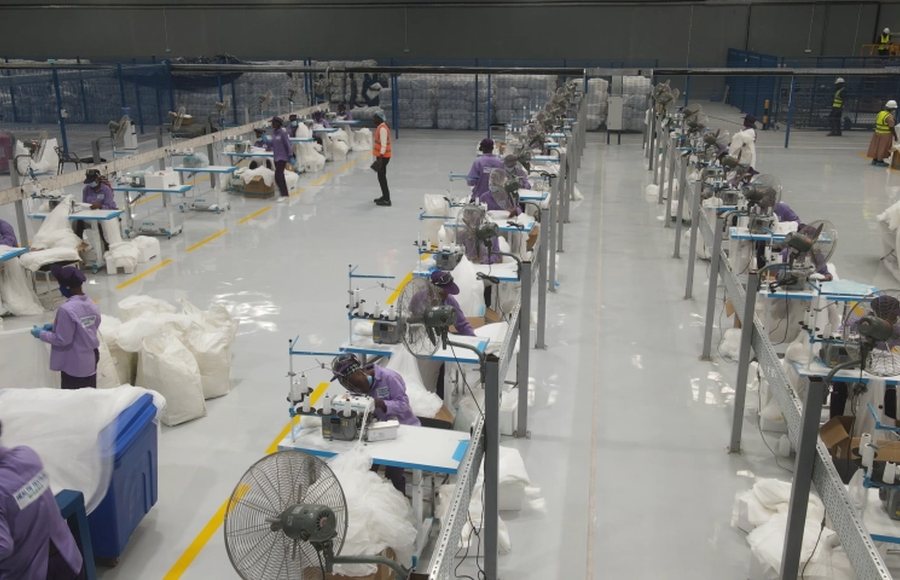
Nigeria has commenced local production of next-generation dual-active ingredient insecticide-treated mosquito nets, marking a new step in the country’s effort to build domestic capacity for essential health products. The new facility, Health Textiles Nigeria FZE, is the first in Nigeria to manufacture dual-active ingredient mosquito nets. At full capacity, it is expected to produce approximately 10 million nets every year and create more than 600 jobs.
The significance goes beyond manufacturing.
Nigeria continues to carry one of the world’s heaviest malaria burdens. WHO estimates that malaria caused 282 million cases and 610,000 deaths globally in 2024, with the African Region accounting for the overwhelming majority of this burden. Nigeria alone accounted for about one-quarter of global malaria cases, according to the Federal Ministry of Health and Social Welfare.
Mosquito nets remain one of the important tools available for preventing malaria. But the malaria challenge is changing. Mosquitoes are developing resistance to some commonly used insecticides, creating a need for prevention tools that can respond to this changing epidemiology.
The locally manufactured PermaNet® Dual combines two active ingredients, deltamethrin and chlorfenapyr, with different modes of action. The product was prequalified by WHO in 2023 and is designed to address the challenge of insecticide resistance.
This is where Nigeria’s local manufacturing ambition becomes particularly important.
The facility emerged from a 2024 Memorandum of Understanding between Vestergaard and the Presidential Initiative for Unlocking the Healthcare Value Chain (PVAC). The partnership was designed not simply to bring a product into Nigeria, but to establish manufacturing capacity, transfer knowledge and develop Nigerian technical skills.
About 80 employees have already been recruited and are undergoing training in manufacturing excellence, quality, occupational health and safety, and regulatory compliance. At scale, the facility is projected to employ more than 600 people.
The development therefore offers a broader lesson for Nigeria’s health sector: health security is also an industrial policy question.
Producing essential commodities closer to where they are needed can help strengthen supply chains, develop local expertise and reduce some vulnerabilities associated with dependence on external supply. The Federal Government has linked the investment to its wider agenda of unlocking Nigeria’s healthcare value chain through local production, private-sector investment and technology transfer.
But production is only the beginning.
The next measure of success will be whether these nets are available, affordable, appropriately procured and effectively distributed to populations at risk, and whether their use contributes to sustained malaria prevention. Quality assurance, regulatory oversight, demand planning and monitoring will be equally important as production expands.
From production to protection
Nigeria has moved from asking, “How do we get enough nets?” to beginning to ask a bigger question:
“How much of the health protection Nigerians need can we build here at home?”
The answer will shape not only malaria prevention, but the future of Nigeria’s health manufacturing ecosystem.