IMMUNISATION | MEASLES & RUBELLA
Nigeria’s vaccination gains must translate into routine protection for every child.
Every child needs more than one opportunity
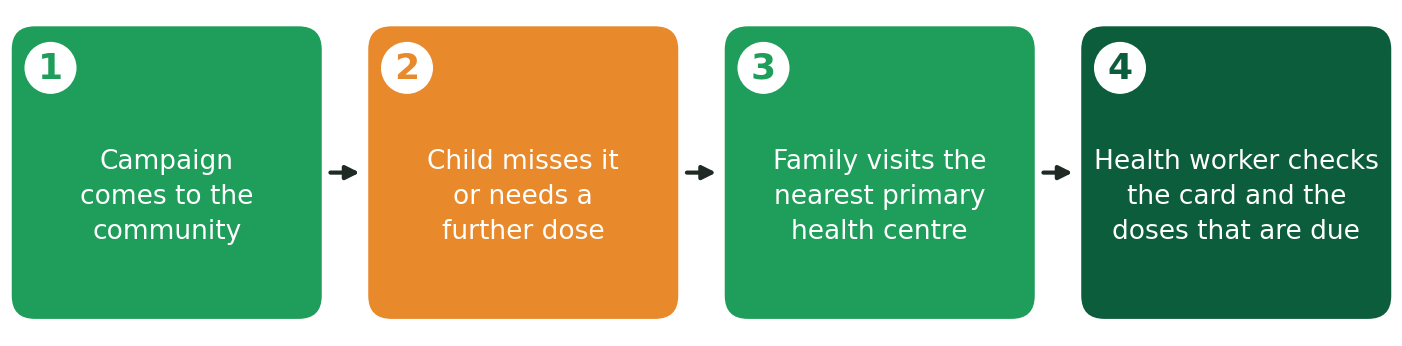
When a vaccination campaign comes to a community, parents and caregivers have an important opportunity to protect their children against preventable diseases. But what happens to children who miss the campaign, or those who need another dose after it ends?
For Nigeria, this is an important question as the country works to protect children against measles and rubella and strengthen routine immunisation.
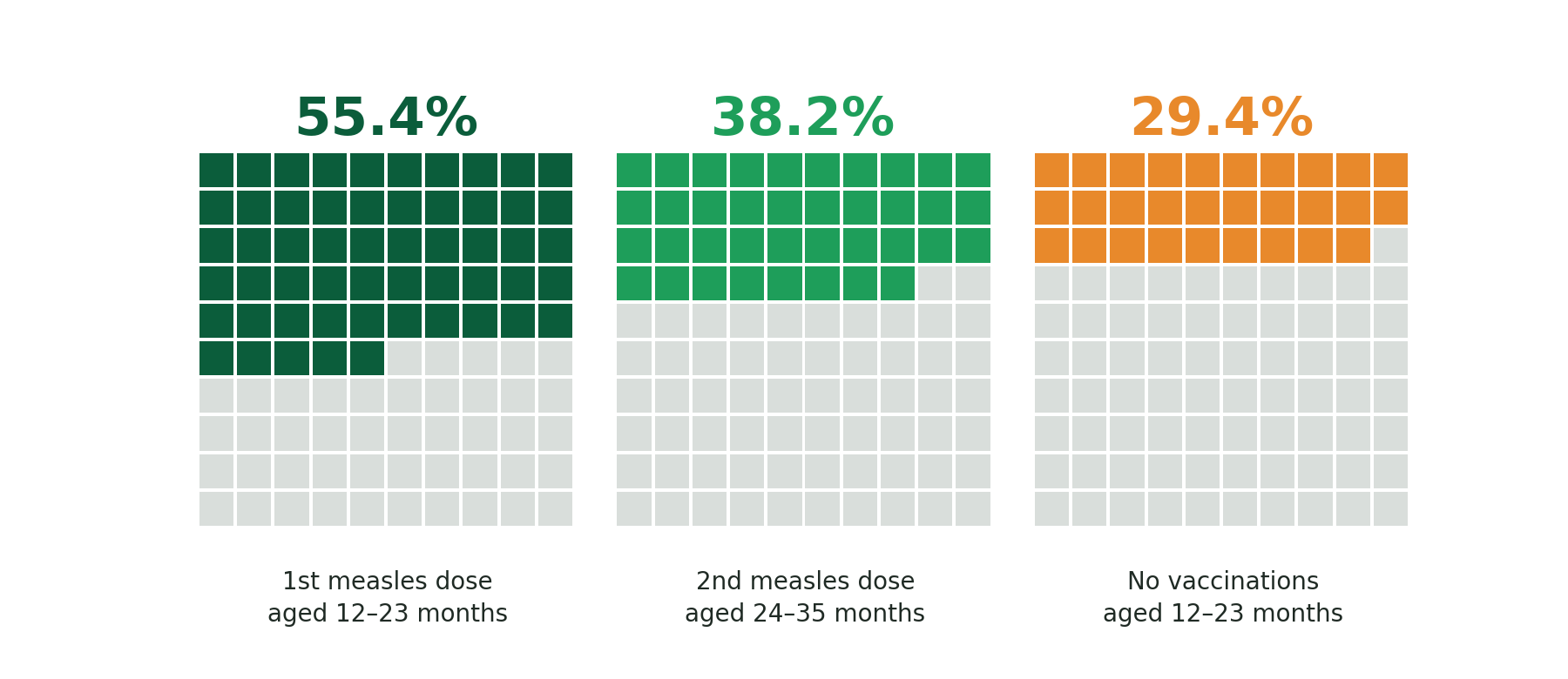
The Nigeria Mini-Demographic and Health Survey 2025–26 Key Indicators Report highlights gaps that deserve attention:
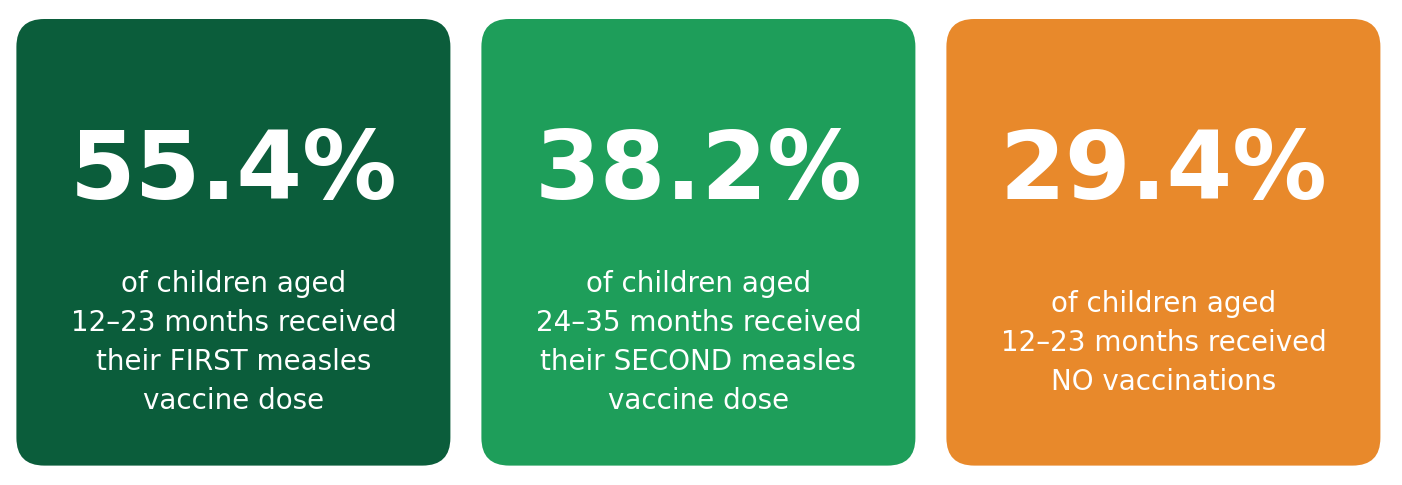
These figures point to a challenge that goes beyond campaign delivery. Reaching children during a mass vaccination exercise is essential, but sustaining protection requires strong routine immunisation services at primary healthcare centres and through outreach to communities.
The numbers at a glance
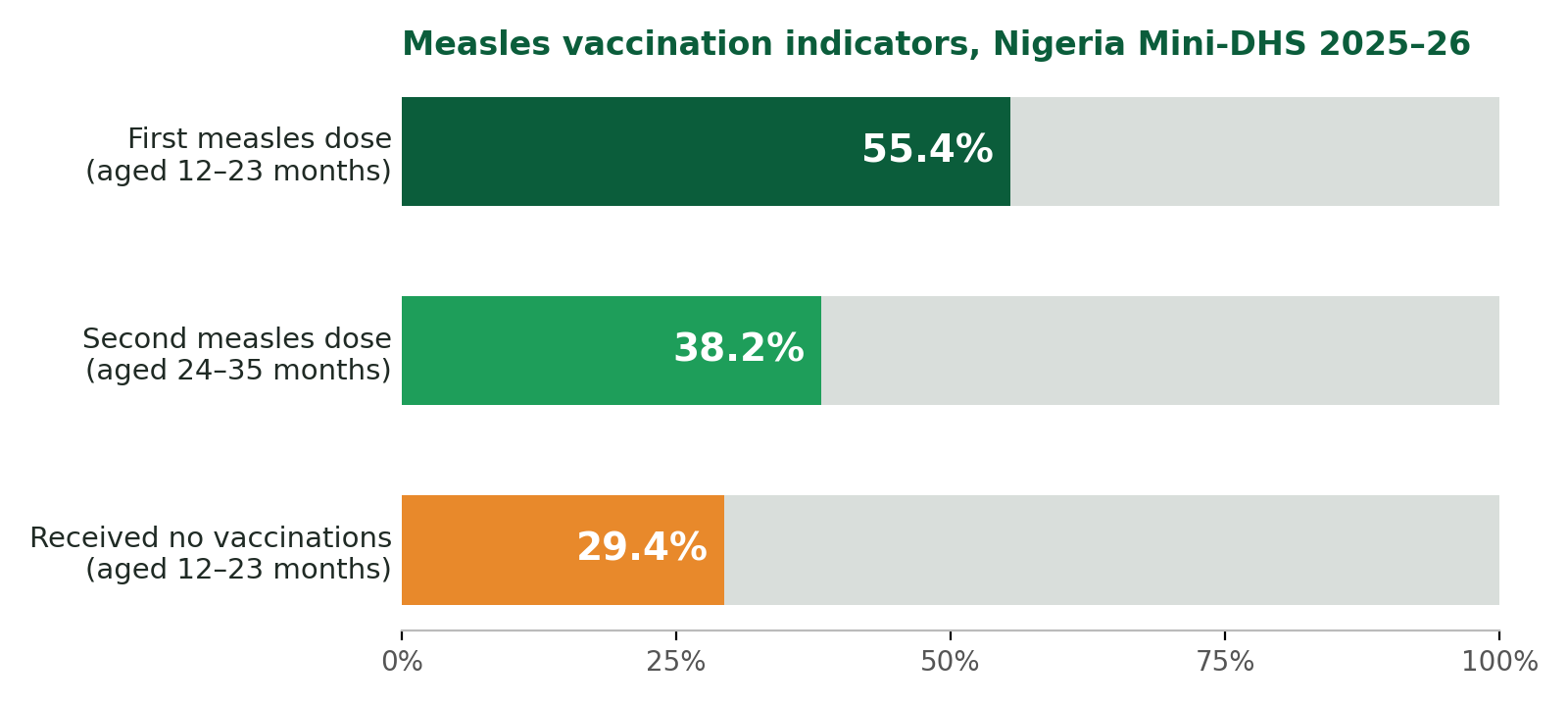
The chart below puts the three indicators side by side. Each bar is measured against 100% of children in that age group, so the grey space shows the share not reached.
Another way to see it: if we picture 100 children in each age group, the squares below show how many fall into each category.
How to read these figures
The survey figures relate to measles vaccination indicators. They should not be interpreted as direct measurements of the MR campaign’s reach or as separate estimates of routine measles-rubella coverage. However, they underline the need to track routine vaccination alongside campaign achievements.
Why does this matter?
Measles spreads easily and can cause serious illness, complications and death, particularly among young children who are not protected. Vaccination helps protect individual children and reduces the risk of wider transmission in communities.
A child who missed a vaccination campaign should not be forgotten. Families can visit their nearest primary healthcare centre to check the child’s vaccination record and find out which doses are due. Health workers can help identify missed doses and guide caregivers on the appropriate schedule.
Turning campaign reach into lasting protection
Closing the gaps requires coordinated action from everyone involved:
The bottom line
A successful campaign is an important milestone, but every child needs continued access to routine immunisation. The next step is to identify who remains unprotected and connect them to the services that can help keep them safe.
Was this page useful to you?
Your answer is anonymous and helps us decide what to publish next.
Thank you. Your feedback helps us improve our news and articles.