CLIMATE & WEATHER | EL NIÑO | NIGERIA
A very strong El Niño is building thousands of kilometres away, and Nigeria’s weather agency has confirmed its onset. The right response is preparation, not panic.
A distant ocean, a local impact
Nigeria is thousands of kilometres from the Pacific Ocean, yet what happens there can change the odds of heat, dry spells and heavy rain at home. El Niño is a natural climate pattern in which surface waters of the central and eastern tropical Pacific stay warmer than usual for an extended period. It is the warm phase of a cycle called the El Niño–Southern Oscillation (ENSO); the cooler phase is La Niña, and when neither is present conditions are ENSO-neutral. El Niño events usually occur every two to seven years and typically last nine to 12 months, although some last longer.

The key point: El Niño does not make every country hotter or drier. It shifts the odds of certain conditions, and the effects depend on location and time of year.
Where the world stands
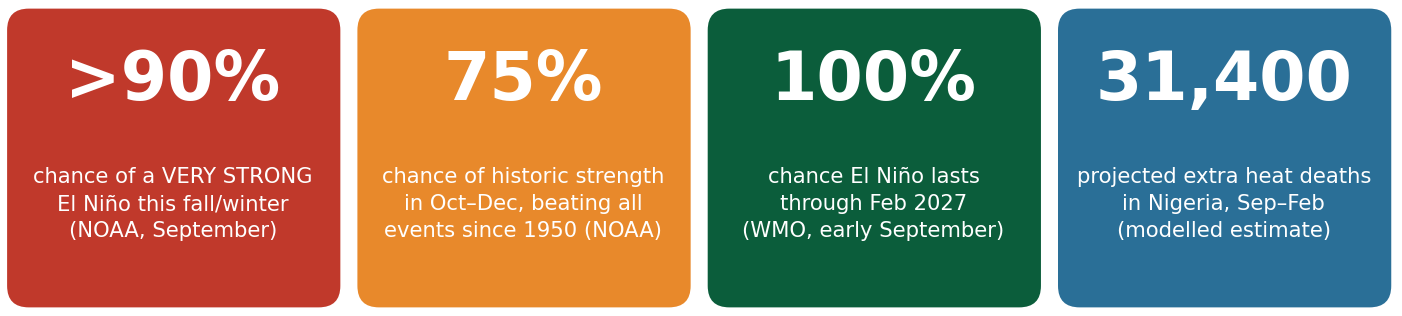
NOAA’s Climate Prediction Center has had an El Niño Advisory in place since July. Its September update put the chance of a very strong event this fall and winter above 90%, with a 75% chance of historic strength in October–December, which would exceed every El Niño since records began in 1950. The WMO put the likelihood of El Niño continuing through February 2027 at 100% in early September. NOAA’s term is “very strong”; the phrase “super El Niño” is used in headlines.
Nigeria’s weather report
NiMet’s 2026 Seasonal Climate Prediction, released on 10 February, assumed a weak La Niña and a largely neutral ENSO phase. It still warned of erratic rainfall, prolonged dry spells (up to 21 days between June and August across several northern and central states) and warmer-than-average temperatures. Its update of 13 August confirmed the onset of a strong El Niño, expected to dominate global climate patterns from August to October.
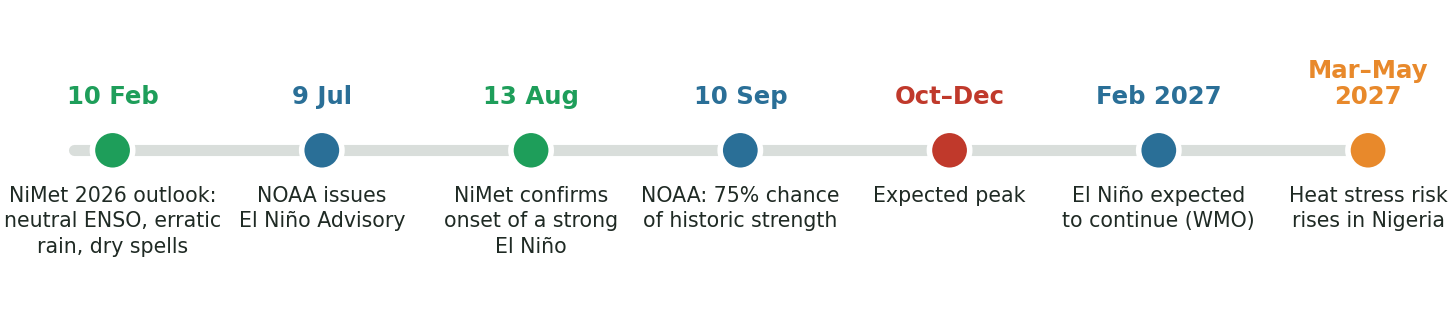
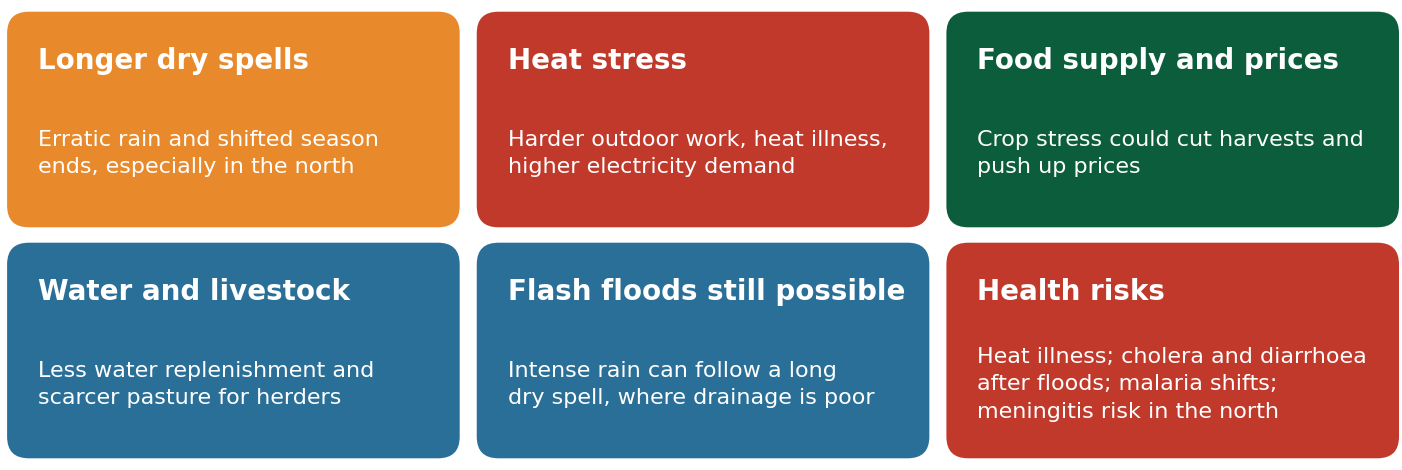
A senior NiMet meteorologist, Musa Tanko, has said the effects are expected to be more pronounced in northern Nigeria, where rainfall could reduce and dry spells lengthen, and that March to May 2027 could bring greater heat stress as the influence grows. He cautioned that “El Niño is not a precise local forecast”: whether farmers see longer breaks, less rain or intense downpours depends on how it interacts with local weather systems. Rainfall deficits and dry spells have already been reported in parts of Borno, Yobe, Kebbi, Sokoto, Bauchi, Gombe and Plateau. As the dry season approaches, NiMet has also warned of hotter days, dust, possible water scarcity and risks of dehydration, heat exhaustion and heatstroke.
What it could mean for Nigerians
Heat is the biggest health warning
Researchers at the University of Chicago’s Climate Impact Lab project that El Niño-linked heat could cause about 451,000 extra deaths worldwide between September 2026 and February 2027, with Nigeria projected to see the most of any country, about 31,400. Extremely hot days are expected to be 44% more frequent than in normal years. This is a modelled estimate, not a prediction of certainty, and the researchers point to heat warnings and worker protections as ways to save lives.
Staying safe: what to do now
The bottom line
El Niño cannot be stopped, but its effects can be reduced by early warning and preparation. Follow NiMet for your area, protect yourself and the most vulnerable from heat, prepare for both dry spells and sudden floods, and plan food and water ahead. Be informed, not alarmed.
Was this page useful to you?
Your answer is anonymous and helps us decide what to publish next.
Thank you. Your feedback helps us improve our news and articles.