CHILD NUTRITION | NIGERIA MINI-DHS 2025–26
Why healthy growth depends on more than filling a child’s stomach.
A full stomach does not always mean a well-nourished child
A child may eat every day and still not receive enough of the right nutrients to grow well. For families, understanding this difference is an important step towards preventing malnutrition.
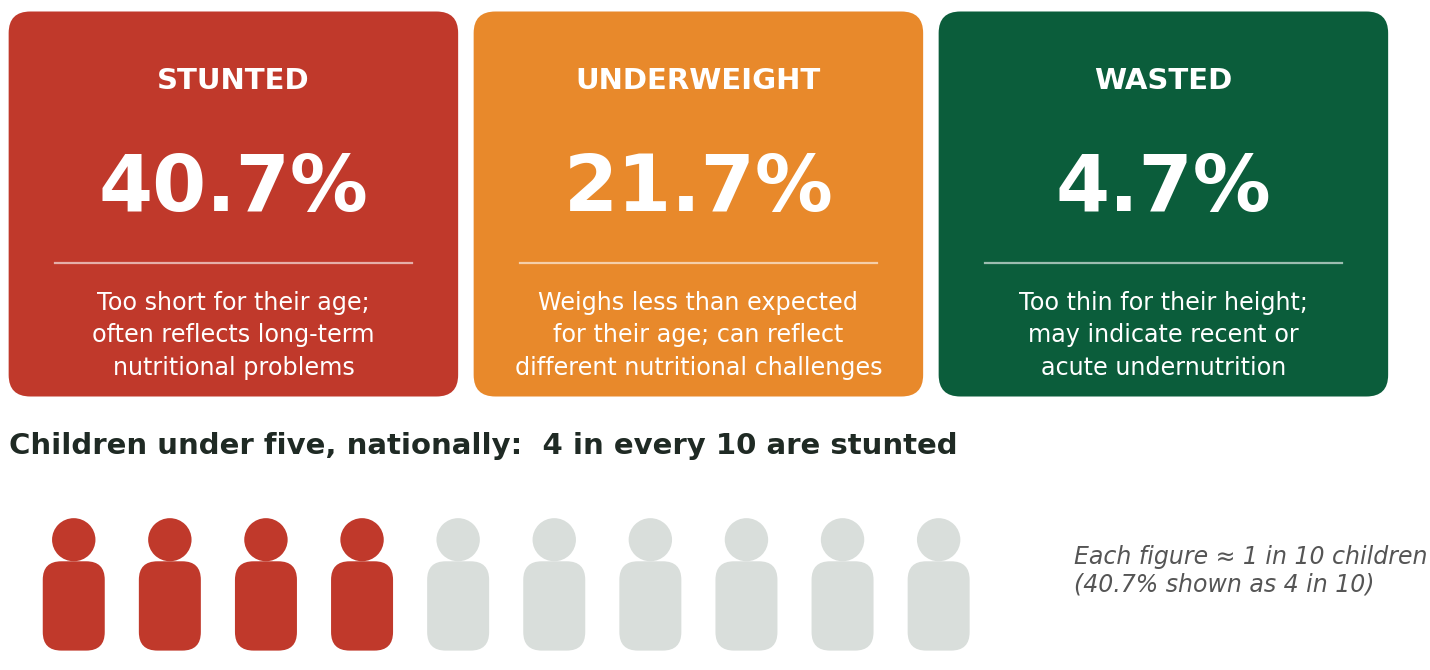
Nigeria’s Mini-Demographic and Health Survey 2025–26 Key Indicators Report presents a concerning picture of child nutrition. Four in every ten children under five, or 40.7%, were stunted nationally. Nationally, 21.7% of children under five were underweight, while 4.7% were wasted. The three terms describe different forms of nutritional difficulty:
Where the gap is widest
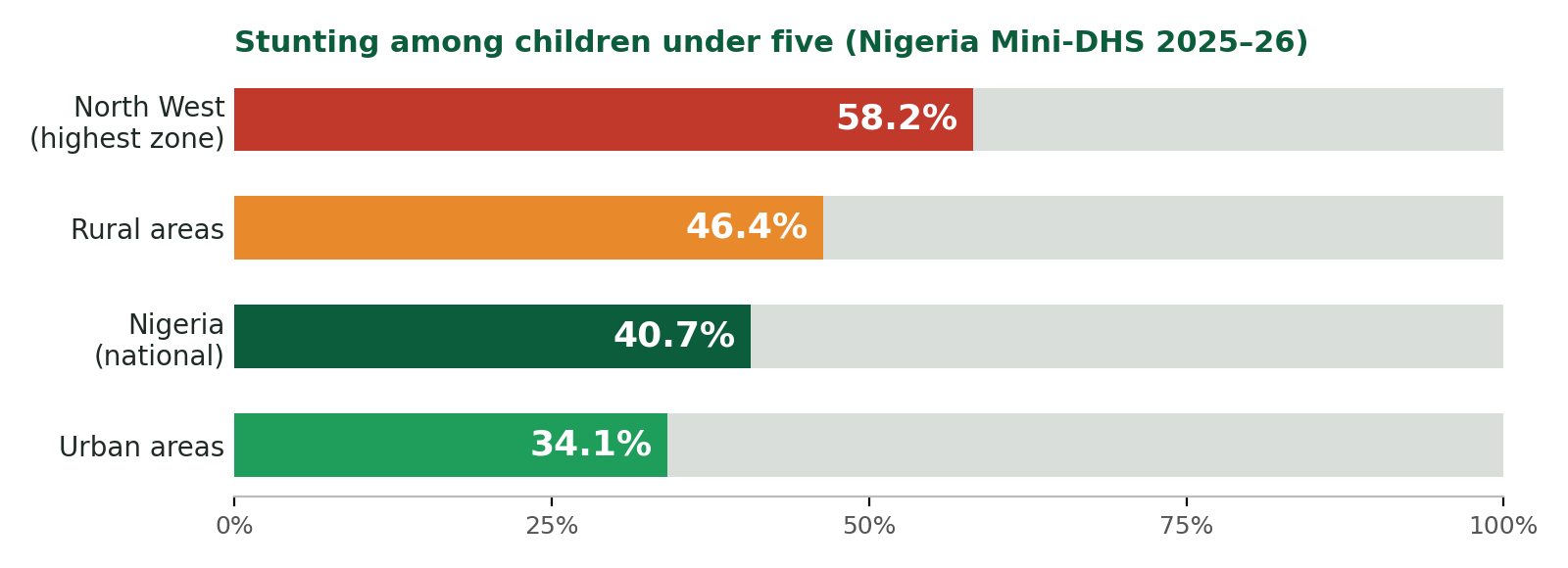
Stunting was higher in rural areas (46.4%) than in urban areas (34.1%). Among the zones, the North West recorded the highest level, at 58.2%.
Why early nutrition matters
The first years of life are a critical period for physical growth, brain development and learning. Poor nutrition can affect a child’s ability to grow, resist infections and reach developmental milestones.
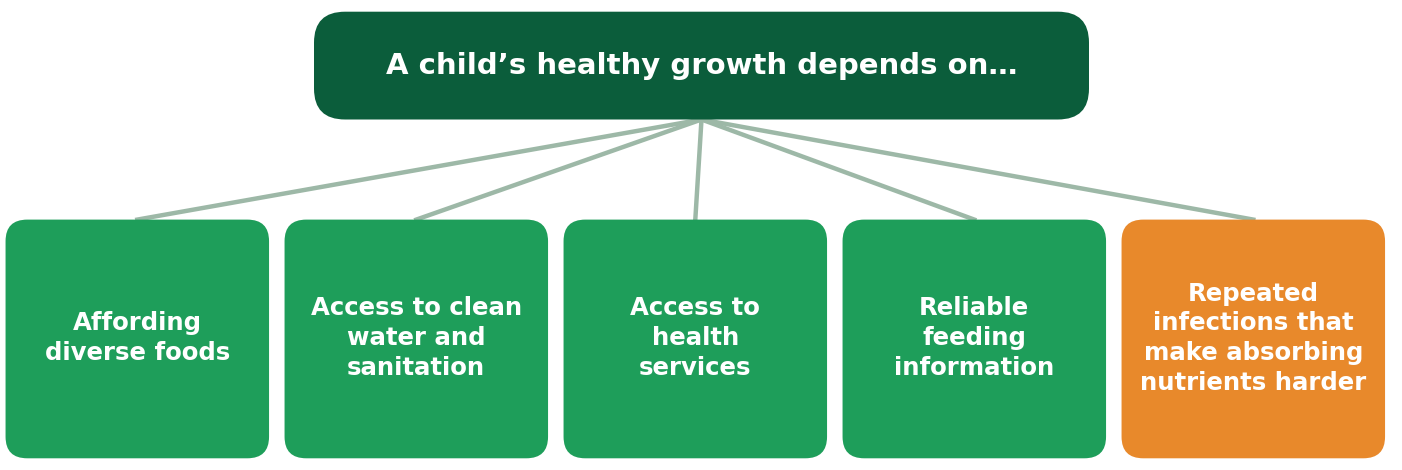
Malnutrition is not always caused by a lack of food alone. Families may struggle to afford diverse foods, access clean water or sanitation, obtain health services, or find reliable information about feeding young children. Repeated infections can also make it harder for children to absorb nutrients and grow well.
What can families and communities do?
Practical steps can make a difference:
What the survey tells us
The figures show that nutrition remains a major child health concern, with substantial differences between rural and urban children and across regions. Addressing it requires action from households, health facilities and government, not simply telling parents to feed their children better.
The bottom line
Good nutrition is an investment in a child’s future. Helping children grow well means improving access to nutritious food, preventing illness and ensuring families can get the advice and services they need.
Was this page useful to you?
Your answer is anonymous and helps us decide what to publish next.
Thank you. Your feedback helps us improve our news and articles.