Across communities, gaps in Primary Health Care are often first experienced by the people who use health facilities every day.
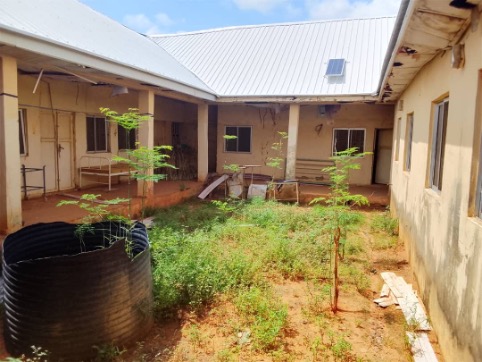
A medicine may be unavailable. Essential equipment may not be functioning. A health worker may not be available. Funding approved for a service may not have reached the facility.
The challenge is ensuring that these experiences are not only reported, but translated into evidence that can lead to action.
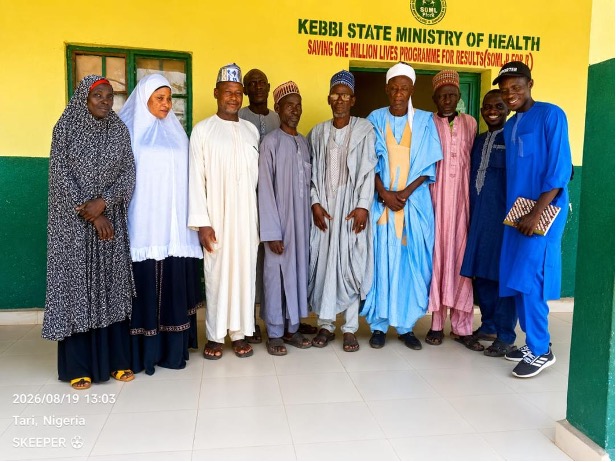
Through the ICSA at the Last Mile Project, Local Health Advocacy and Accountability Teams (LHAATs) are helping communities do exactly that.
Bringing evidence closer to decision-making
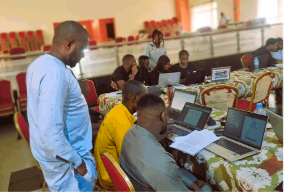
LHAATs gather evidence on health services, financing and accountability gaps and engage relevant decision-makers to advocate for practical solutions.
This is important because state and national averages can conceal significant differences between individual facilities and communities.
C-WINS’ broader ICSA approach is built around strengthening this connection between community evidence, government decision-making and frontline service delivery. (c-wins.org)
In Katsina State alone, 24 LHAATs worked across 24 LGAs in August 2026, undertaking facility data collection, advocacy and community mobilisation. Their activities reached 254 apex PHC facilities.
Evidence is only the beginning
Collecting information does not automatically improve services.
The value of community-generated evidence is demonstrated when an identified problem is taken to the appropriate decision-maker, action is secured, and the resulting change is verified.
This creates a simple accountability pathway:
Problem identified → Evidence generated → Decision-maker engaged → Action taken → Result verified
Examples emerging from ICSA show the potential of this approach. Across participating states, community-led advocacy has contributed to financing commitments, improvements in frontline services and renewed attention to gaps identified at PHC level. (c-wins.org)
Building accountability from the community upward
Community accountability is not intended to replace government responsibility. Rather, it provides decision-makers with evidence about what is happening where services are delivered and gives communities a structured way to participate in improving their health system.
The next phase is therefore not simply to count how many facilities have been visited or how many issues have been documented.
The stronger measure will be how many identified gaps progress to verified resolution.
That is where evidence becomes valuable: when it leads to action.