PRIMARY HEALTHCARE | KEBBI STATE | ICSA PROJECT
How advocacy in Birnin Kebbi and Ngaski offers a pathway to stronger primary healthcare, while conditions at a facility in Koko/Besse highlight the cost of leaving gaps unaddressed.
A mother arrives at a primary healthcare centre with a sick child. She expects health workers, basic equipment for essential investigations, and a safe place to receive care if admission becomes necessary. But what happens when the health workers are present, the facility is clean and water is available, yet there is no functional laboratory and no admission bed?
What a supportive supervision visit found
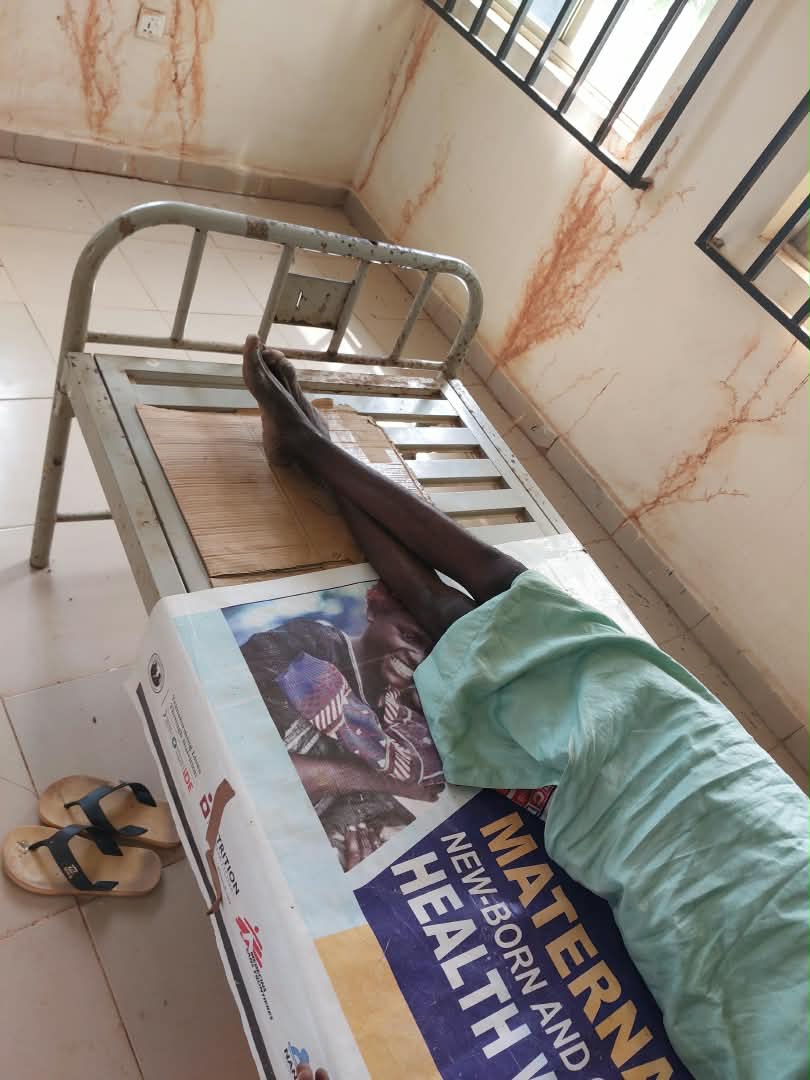
The Local Health Advocacy and Accountability Team (LHAAT) visited Tungar Magaji Primary Health Care Centre in Takware Ward, Koko/Besse Local Government Area (LGA), Kebbi State, on 23 October 2026. The visit revealed both encouraging signs and gaps that need urgent attention from the authorities responsible for primary healthcare.
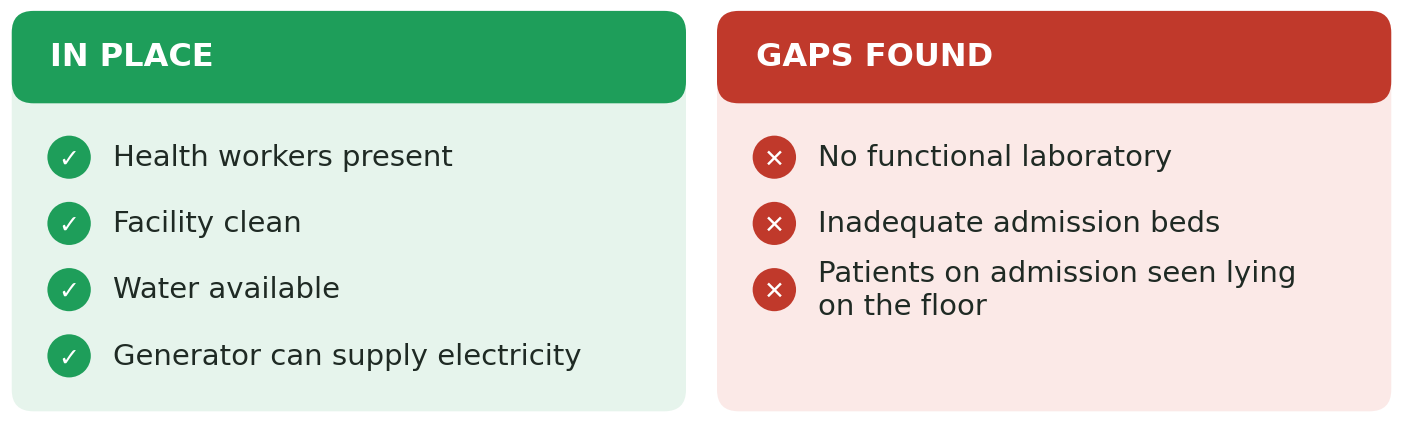
These gaps are more than infrastructure problems. Without basic diagnostic services, the investigations available at the facility are limited, and inadequate beds can compromise safe and dignified care for patients who need admission. The question is not only whether government has allocated money to healthcare, but whether that investment reaches the facilities where people seek care.
When local leadership makes health financing a priority
Across Kebbi State, the Integrated Child Survival Advocacy (ICSA) project works through LHAATs to strengthen local government commitment to primary healthcare financing, improve transparency and promote accountability for health expenditure. The team has engaged six LGA Chairmen, advocating for more funding for primary healthcare and disclosure of expenditure, and for priority to essential child survival interventions: routine immunisation, malaria prevention and treatment, and nutrition.
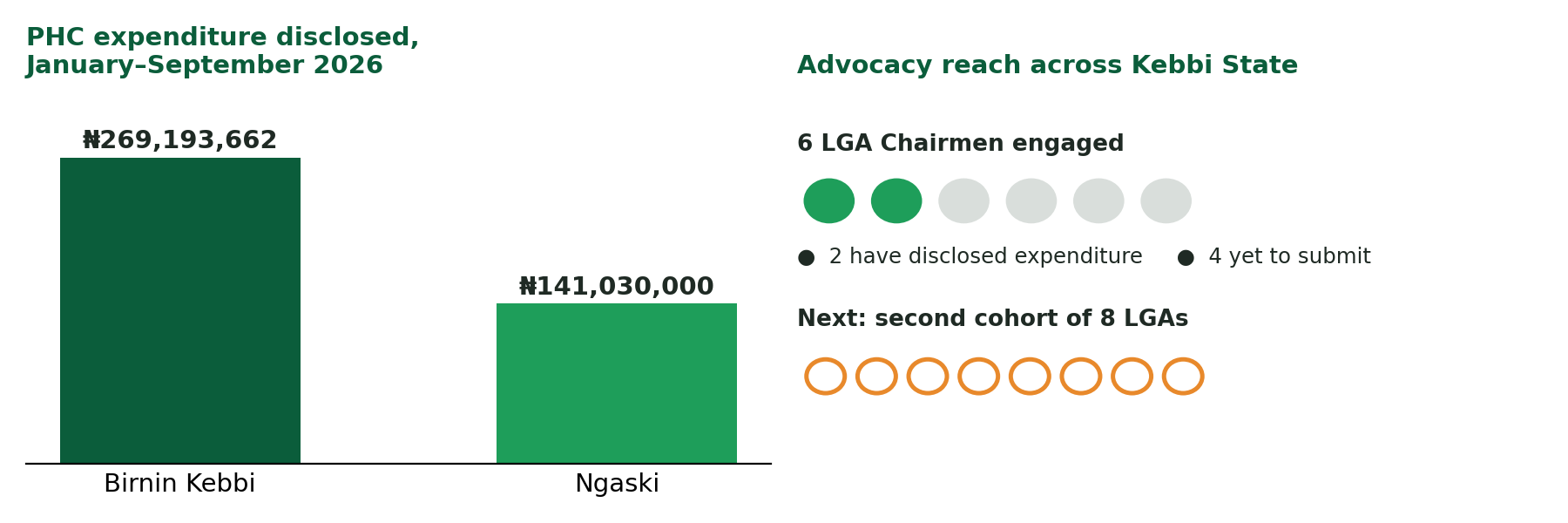
Disclosure is an important step: communities and accountability groups gain a stronger basis for asking how resources are used. The engagements have also secured commitments to increase LGA health budget allocations for immunisation, malaria and nutrition in 2027. At an LGA dialogue meeting, participants agreed that Directors of Health would facilitate procurement of basic supplies for facilities using available monthly funds from the Basic Health Care Provision Fund (BHCPF), KECHEMA and LGA resources, with LHAATs monitoring implementation.
The gap between spending and service delivery
The figures from Birnin Kebbi and Ngaski do not, on their own, show whether every facility has the equipment, supplies, infrastructure and personnel for quality care. The findings in Koko/Besse do not establish that its challenges are caused by inadequate funding alone, but they identify specific gaps for the relevant authorities to address and a practical basis for follow-up advocacy. A functional laboratory and adequate beds are not optional additions; they are part of the essential conditions that let facilities serve communities. For children, pregnant women and other vulnerable patients, an open and staffed facility without essential equipment still has limited capacity to respond.
What must happen next: ICSA’s five asks to LGA leaders
The ICSA Kebbi State Team will follow up with the four LGAs yet to submit their primary healthcare expenditure information and extend advocacy to the second cohort of eight LGAs, broadening transparency and strengthening local ownership of primary healthcare financing.
Political will must reach the last mile
The measure of local government commitment is not the amount recorded in a budget or expenditure report. It is whether a mother can bring her child to a facility and find the basic services needed for appropriate care, whether a patient who needs admission has a bed, and whether health workers have the tools to do their jobs. LGA Chairmen must turn financing commitments into measurable improvements, while health authorities and community accountability teams track progress. A budget should not end as a figure on paper. It should make a difference in the life of every child, every mother, and every person who depends on primary healthcare.
Was this page useful to you?
Your answer is anonymous and helps us decide what to publish next.
Thank you. Your feedback helps us improve our news and articles.