Nigeria is increasing investment in Primary Health Care, but an important question remains: how much of that financing ultimately translates into better services for patients?
The Federal Government reports that the latest ₦32.9 billion Basic Health Care Provision Fund (BHCPF) disbursement is supporting more than 8,300 Primary Health Care facilities nationwide, through performance-based financing linked to defined indicators. The government plans to expand coverage to approximately 13,000 facilities. (Health and Social Welfare USA)
This represents an important investment in strengthening frontline healthcare. But increased financing is only one part of the pathway to better health outcomes.
For communities, health financing becomes meaningful when it translates into available medicines, functioning equipment, adequate health workers and reliable services at the point of care.
Following the money to the last mile
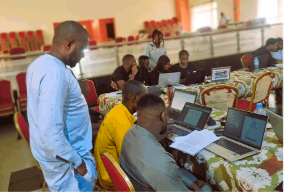
Through the Integrated Child Survival Advocacy at the Last Mile (ICSA) Project, C-WINS and its partners are using evidence, advocacy and community accountability to examine some of these issues across 145 LGAs in Kaduna, Kano, Katsina, Kebbi and Sokoto States. (c-wins.org)
Local Health Advocacy and Accountability Teams gather evidence from facilities and communities and use it to engage decision-makers on identified gaps.
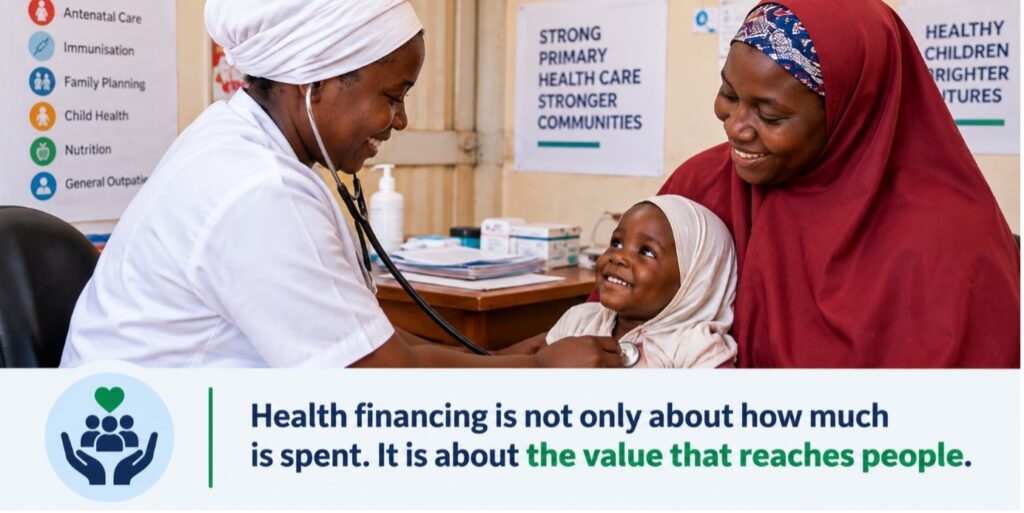
The approach recognises that allocating resources is not the same as delivering services. Funding must move through approval, release and utilisation before communities experience any benefit.
Evidence of action
Early results demonstrate what this can look like.
Six of the first 50 LGAs tracked through ICSA met the project’s financing benchmark: Igabi in Kaduna; Ajingi, Dambatta and Tarauni in Kano; and Kusada and Sandamu in Katsina. (c-wins.org)
In Kurfi LGA, Katsina State, a recent follow-up documented ₦30 million worth of medicines, free delivery packs for 10 apex PHCs and haematology machines for five apex facilities.
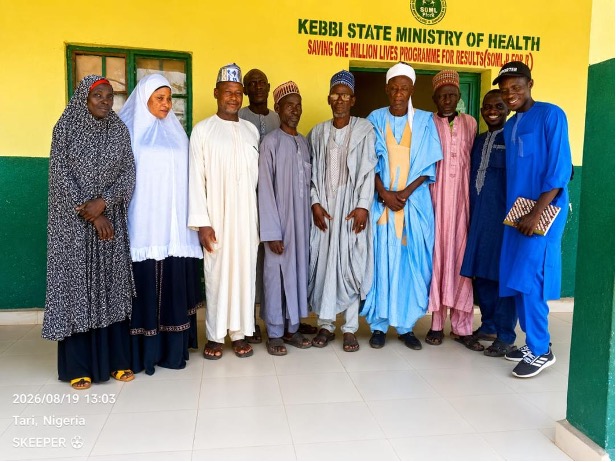
Elsewhere, ICSA advocacy has contributed to the release of ₦65 million for maternal, newborn and child health services in Kaduna, while approximately ₦2.6 million was unlocked for PHC needs in Sokoto. Health insurance payments to PHCs in Kebbi also resumed, restoring free services for children under five and pregnant women. (c-wins.org)
These examples illustrate why health financing should be followed beyond the budget line.
From allocation to results
The stronger measure of health financing is ultimately what changes for patients.
Did the money get released? Was it used for its intended purpose? Did medicines reach the facility? Was equipment available when needed? Did women and children receive better services?
For C-WINS, strengthening PHC financing therefore means following resources through the entire pathway:
Budget → Approval → Release → Utilisation → Facility → Service → Result As Nigeria continues to invest in Primary Health Care, accountability for this pathway will be essential. The real measure of health financing is not only how much is spent, but the value that reaches people.