The Wife of the Kebbi State Governor, Dr. Nafisa Nasir Idris, has committed to supporting community-led advocacy efforts to address gaps in Primary Health Care (PHC) delivery across Kebbi State.
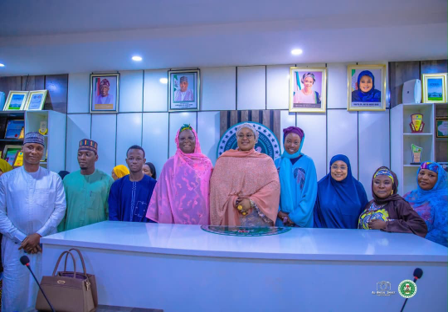
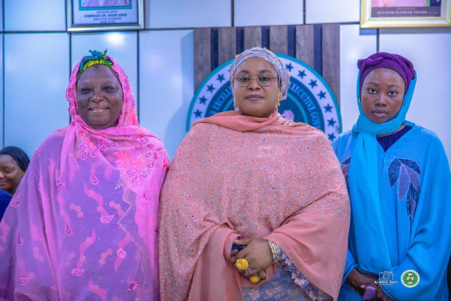
Dr. Nafisa made the commitment when she received the Executive Director of NANA Girls & Women Empowerment Initiative, Dr. Fatima Adamu Tagari (Yauri), and members of her delegation during a courtesy visit in Kebbi State.
The First Lady commended NANA Girls & Women Empowerment Initiative for its work to improve the wellbeing of women, girls and children and expressed her readiness to support efforts that contribute to better health and social outcomes across the state.
A key focus of the discussion was the Integrated Child Survival Advocacy at the Last Mile (ICSA) project, implemented by the Centre for Well-Being and Integrated Nutrition Solutions (C-WINS) in consortium with the Association of Civil Society Organizations on Malaria Control, Immunization and Nutrition (ACOMIN) and NANA Girls & Women Empowerment Initiative.
The ICSA project promotes sustainably financed, integrated, community-led and accountable PHC systems, with a focus on ensuring that children in underserved communities are reached with essential immunisation and malaria services.
Through the project, Local Health Advocacy and Accountability Teams (LHAATs) are working with communities to identify and document gaps in PHC facilities and advocate with relevant authorities for appropriate action. The teams conduct routine visits to selected PHCs, document service delivery challenges and highlight achievements that can inform constructive engagement with government.
During the meeting, Dr. Tagari briefed the First Lady on the findings emerging from LHAAT engagement in Kebbi State, including gaps affecting the availability and functionality of delivery services in some PHCs.
Dr. Nafisa requested that LHAATs expand the documentation of similar gaps across additional Local Government Areas and use the evidence generated to strengthen advocacy for action. She expressed her commitment to use the evidence and issues identified through LHAAT engagement to engage the Governor and support advocacy for appropriate responses to priority health system gaps.
The commitment provides an opportunity to strengthen the link between community-generated evidence, high-level advocacy and government action, enabling issues identified at PHC level to reach decision-makers and receive appropriate attention.
Dr. Tagari also briefed the First Lady on NANA’s other interventions in the state, including the Women Economic Empowerment and Justice through Waste-to-Wealth Enterprises Project, supported by ActionAid Nigeria under the Renewed Women’s Voice and Leadership Nigeria Project and funded by Global Affairs Canada, as well as a UNICEF-supported project focused on empowering adolescent girls and ending child marriage through gender-transformative, multi-sectoral and community-led action.
The Commissioner for Environment, Alhaji Musa Tungulawa, who was also present, described the Waste-to-Wealth initiative as a promising intervention with potential to create livelihoods, promote environmental sustainability and reduce youth idleness. He encouraged its expansion across more Local Government Areas or on a zonal basis to increase participation and impact.
NANA Girls & Women Empowerment Initiative has operated in Kebbi State since 2015, implementing interventions focused on health, women’s economic empowerment, adolescent girls and community development.
The engagement between the First Lady and NANA reinforces the importance of community-led accountability and evidence-based advocacy in identifying PHC gaps and promoting timely action to improve health services for women and children across Kebbi State.